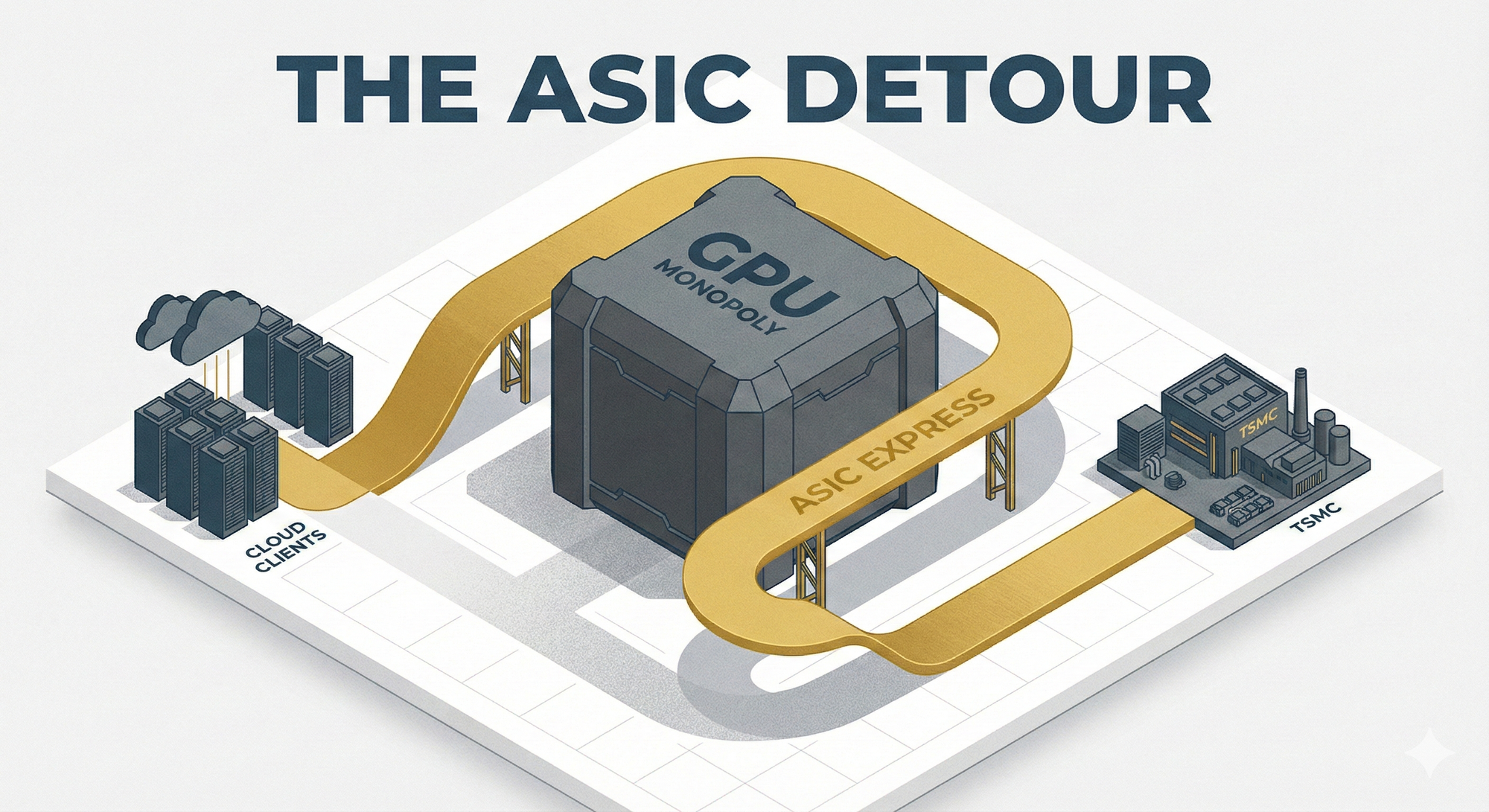
If NVIDIA's H100 is the "nuclear weapon" of the AI era, then what tech giants like Google, Microsoft, and Amazon are doing is trying to break free from reliance on a single arms dealer and build their own arsenals.
This wave of "de-NVIDIA-fication" and "in-house chip development (ASIC)" is reshaping the global semiconductor landscape. However, while Silicon Valley giants possess the world's smartest algorithmic brains, they lack the physical means to "materialize" chips. They don't understand how to repair photomasks, how to apply 3-nanometer thermal adhesive, let alone how to compete with TSMC for production capacity.
This enormous chasm has created a unique historical opportunity for Taiwanese manufacturers.
If Wall Street capital is to invest in this "non-NVIDIA camp," apart from buying into the two US EDA giants (Synopsys/Cadence), almost all the remaining funds will flow to Taiwan. This is not a sector where all stocks rise and fall together; we must deeply deconstruct this mysterious group known as "ASIC and IP."
Chapter One: Deconstructing Terminology – A Prerequisite Before Investing in ASIC
Before diving into individual stock analysis, we must first clear two cognitive hurdles: What is an ASIC? and How exactly does this business make money?
1. What is an ASIC? Why Google makes TPU?
Many investors are familiar with GPUs (Graphics Processing Units) but have only a vague understanding of ASICs. We can use this analogy:
GPU (e.g., NVIDIA H100):
Like a "high-end ready-to-wear suit." It's designed to be versatile; anyone can wear it (it can run AI, mining, games). But precisely because it's designed to fit everyone, it may not be perfectly tailored, and a lot of fabric is wasted (redundant circuits), leading to high costs and power consumption.
ASIC (Application Specific IC):
Like a "bespoke tuxedo." It's designed for a "specific purpose." Once created, it can only perform that one task, but it does so with ultimate perfection.
Why do tech giants develop ASICs?
Taking Google as an example, they found that using GPUs to run Gmail's spam classification or YouTube's recommendation algorithms was excessively power-intensive. So, they designed the TPU (Tensor Processing Unit), which is a type of ASIC. It stripped away all unnecessary features from a GPU (like ray tracing), retaining only the AI computation units.
Result: TPUs are several times more efficient than GPUs for specific tasks, and their cost is lower.
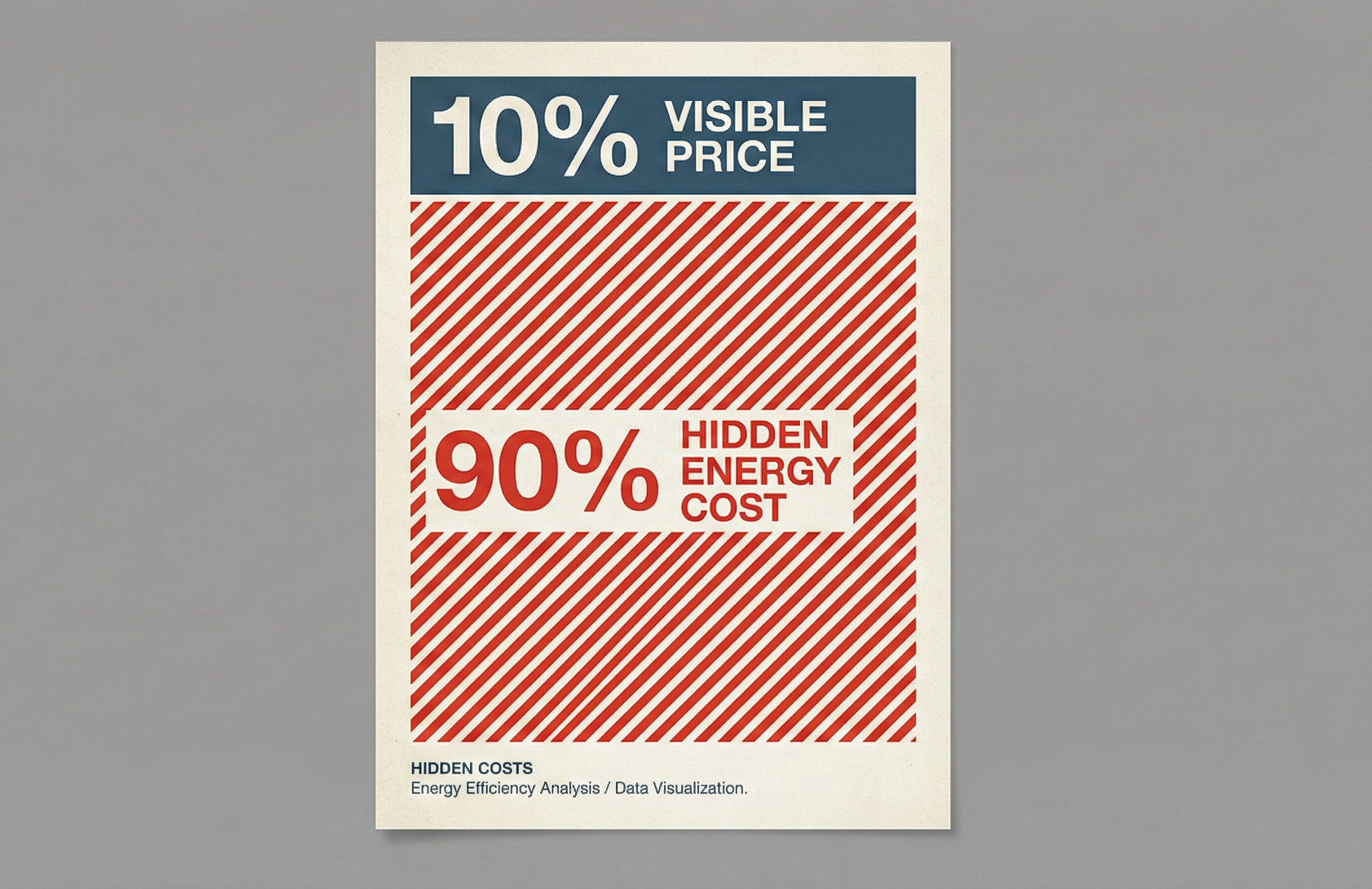
This is why Amazon (AWS) has Trainium/Inferentia, Microsoft has Maia, and Tesla has Dojo. This isn't for technological showmanship, but to save tens of billions of dollars annually in electricity and hardware expenses.
2. Business Models: What are NRE and Turnkey?
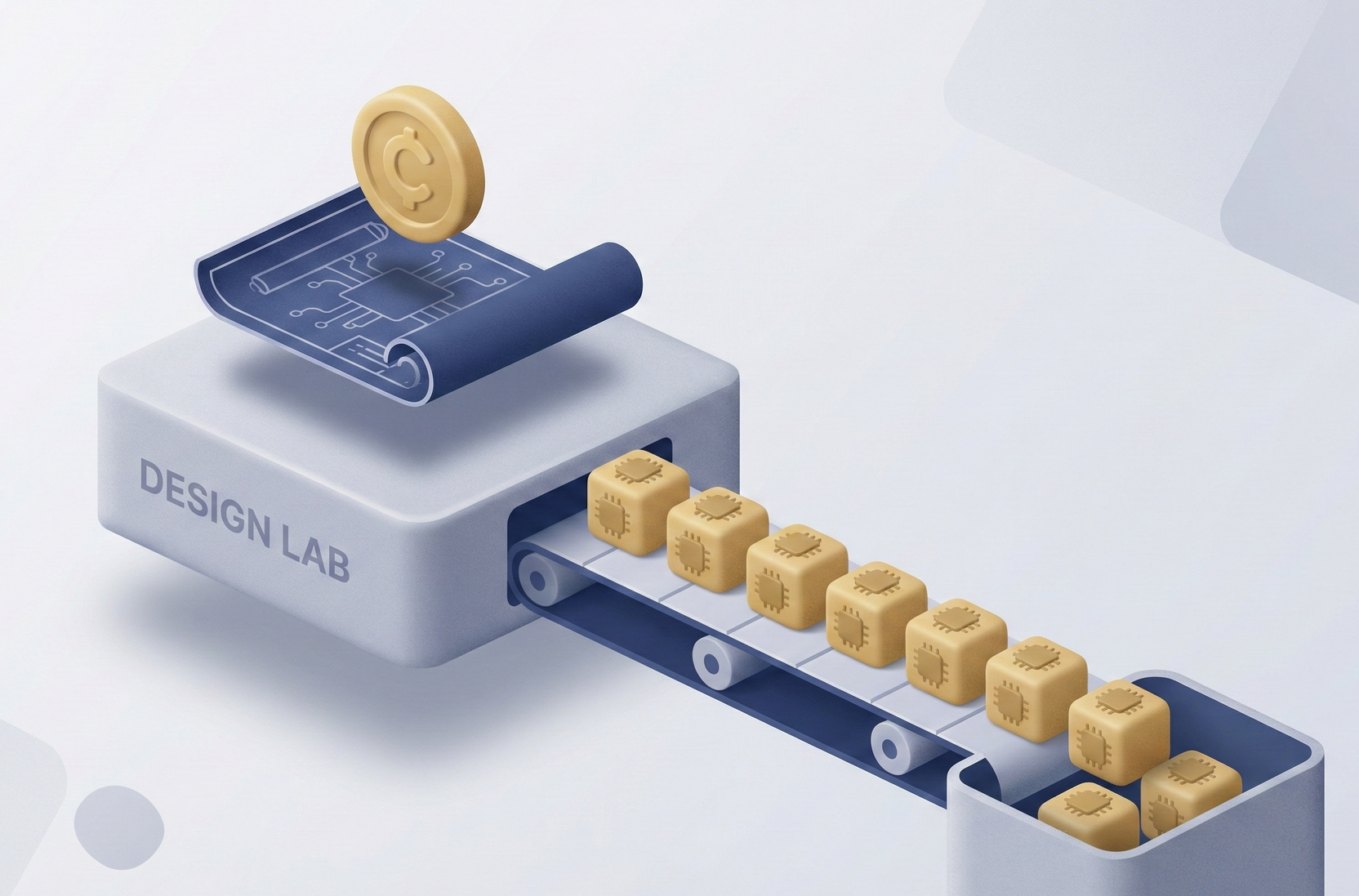
Design service companies in Taiwan (such as GUC and Alchip) earn money from two different stages. This is like a hybrid of an "architect" and a "landlord."
First Revenue Stream: NRE (Non-Recurring Engineering, Design Fees)
Definition: When Amazon commissions GUC to design a chip, it first pays a "design fee." This is a one-time revenue.
Significance: This represents "certification of technical capability." Higher NRE indicates more challenging projects (e.g., 3-nanometer process) and higher technical thresholds. However, NRE is a one-off payment; once the design is complete, it's gone.
Second Revenue Stream: Turnkey (Mass Production Royalty/Turnkey Services)
Definition: This is the main course. When the chip design is finalized, Amazon says, "Great, this chip is perfect; please order 1 million units from TSMC for production." At this point, the design company is responsible for handling all manufacturing, packaging, and testing processes and earns a profit from each chip.
Significance: This is the "source of revenue explosion." As long as the client's chip sells well, this revenue stream will flow in continuously, and the profit margins are extremely high.
Chapter Two: First Tier — ASIC Design Service
Companies in this tier stand directly between Silicon Valley giants and TSMC. They are the frontline troops in the battlefield.
1. GUC (3661): A Brave Mercenary Dancing with Wolves
GUC is currently the leading ASIC stock in Taiwan's market, characterized by its "speed, aggression, and precision."
Client Structure: Its largest client is global cloud computing giant Amazon (AWS). This proves that GUC possesses world-class technology, capable of handling advanced processes like 5nm and even 3nm.
Crucial Insight: US Competition and High Risk
Although GUC's technology is strong, its investment risk is relatively higher.
Stepping into the backyard of US giants: GUC faces not only Taiwanese peers but also more formidable opponents – Broadcom and Marvell. These two American behemoths are also aggressively competing for the ASIC market. Compared to GUC, Broadcom possesses more powerful SerDes (high-speed transmission) IP and networking technology. GUC must constantly maintain its technological lead, otherwise it risks being "dimensionally crushed" by US giants.
A Gambling Gene: In the past, GUC's stock price was halved due to US sanctions on a Chinese client (Phytium). While its focus has now shifted to North America, this "seeking wealth amidst danger" gene implies that its stock price volatility will be very high.
2. Alchip Technologies (3443): The Royal Guard with a Pure Bloodline
Compared to GUC's aggressive nature, Alchip Technologies exhibits a different demeanor: steadiness and privilege.
"Rich Dad" Advantage: Alchip's largest shareholder is TSMC. In an era of tight production capacity (CoWoS packaging queues can take two years), this is its biggest moat.
HBM and CoWoS Entry Ticket: The key to winning in AI chips often lies not in computation, but in "High Bandwidth Memory (HBM)" and "Advanced Packaging (CoWoS)." Because Alchip is TSMC's "son," it can gain access to TSMC's critical technology IP and design parameters at the earliest stage.
Crucial Insight: A Stable Haven
Many investors find Alchip's stock price not lively enough, but this is precisely its advantage.
Restricted by TSMC's strict compliance requirements, Alchip is unlikely to accept controversial orders (such as sensitive Chinese clients), which allows it to avoid geopolitical minefields. In the intensifying US-China tech war, Alchip demonstrates higher "safety" and "long-tail effect" than GUC.
Chapter Three: Second Tier — Pure IP Licensing (Silicon IP)
These companies don't make chips for you (they are not responsible for manufacturing); they only sell "design blueprints." Their gross profit margins are typically 100%, making them standard "landlords."
1. M31 (6643): A Precisely Positioned Toll Booth
M31 specializes in IP for "high-speed transmission interfaces" such as USB, PCIe, and MIPI.
Technical Essence: Frankly, the technical difficulty of standard interfaces like USB or PCIe is not as formidable as processor cores (CPU cores). US giants like Synopsys or Cadence are certainly capable of doing it, and doing it better.
Crucial Insight: The Goldmine Large Firms Don't Want to Touch
M31's moat lies not in "globally unparalleled technology," but in its "ultimate cost-effectiveness and precise positioning."
US large firms charge very high fees, primarily serving top-tier clients. M31, on the other hand, deeply cultivates TSMC's various special process nodes. For medium to large IC design companies, M31 is perfectly positioned in a sweet spot that "large firms don't want to compete for, and small firms can't achieve."
Although its profit margin is not as exaggerated as eMemory's, its significant market share means it's like a highway toll booth where every car must pass, providing a stable cash flow.
2. eMemory (3529): The Invisible Memory Kingpin
eMemory specializes in eNVM (embedded Non-Volatile Memory). It acts as the "safe box" or "ID card" within a chip.
Compared to M31, eMemory has stronger future growth potential.
Essential for the Chiplet Era: As chips move towards Chiplets (stacking small dies), each small die requires its own "ID card," repair parameters, and security keys. This means the adoption rate of eNVM will increase sharply.
Process Lock-in: eMemory's IP is directly embedded into the foundry's manufacturing process. Once TSMC's 5nm process platform adopts eMemory's technology, all clients using that process are essentially "forced" to pay eMemory. With the increasing demand for cybersecurity in future AI edge computing, eMemory's royalty ceiling remains very high.
Chapter Four: The IP World's Resistance — Andes Technology and Architectural Revolution
If Alchip and GUC are helping giants build houses, then the protagonist of this chapter is challenging the rules of the "foundation."
Andes Technology (6533): The RISC-V Flag Bearer Challenging Hegemony
In the world of processor IP, ARM is like Microsoft's Windows, with a market share as high as 99%. However, it is closed-source, expensive, and increasingly assertive (recently even suing Qualcomm). This makes giants like Google and Meta uneasy.
This post is for subscribers only
Sign up now to read the post and get access to the full library of posts for subscribers only.