
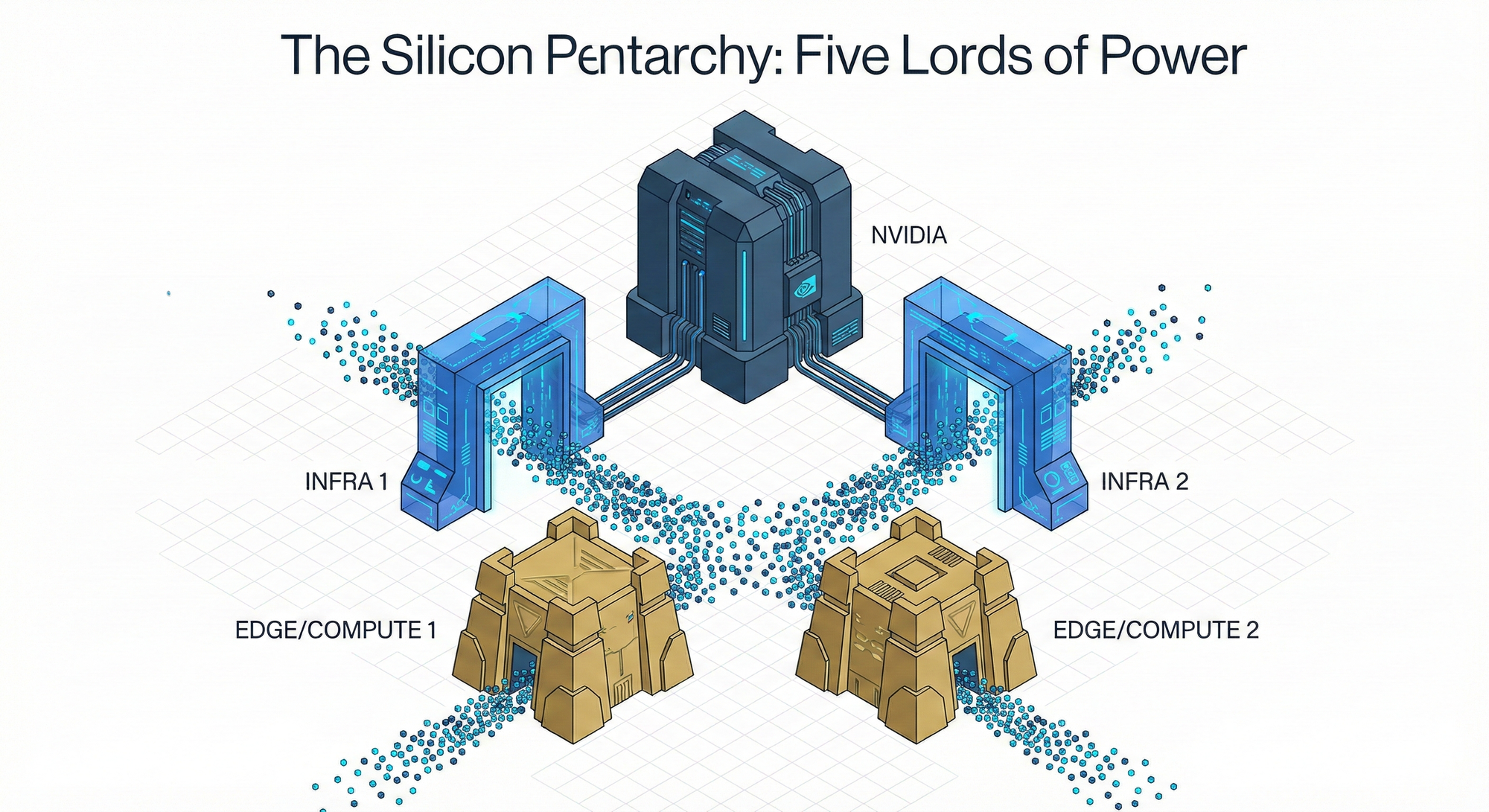
The strength of US Fabless (fabless design) companies lies not in how many chips they sell, but in their ability to define the future of computing.
While TSMC controls manufacturing, these US giants control the "Ecosystem" and "Standard". It is NVIDIA that dictates how AI computes, and Broadcom that determines how data flows. They are the lords of Silicon Valley, and chips are merely the vehicles through which they collect their tolls.
We divide these five major giants into three power groups:
🦅 Group One: The Compute Emperors
Core Mission: To provide the brains for AI and data centers. Their battle is over who can offer the most powerful brute force performance at this moment.
1. NVIDIA (NVDA) —— A 'System Monster' in Chip's Clothing
Stop thinking of it as merely a chip design company. Jensen Huang is transforming NVIDIA into a 'data center systems provider'.
- True Moat: CUDA's Software PrisonWall Street loves to discuss CUDA, but its true significance lies in its role as a form of faith-based lock-in. Millions of developers worldwide have spent over a decade familiarizing themselves with CUDA's syntax, resulting in all AI models 'defaulting' to running on NVIDIA chips. Replacing NVIDIA is not as simple as swapping out a chip; it would require rewriting global software infrastructure.
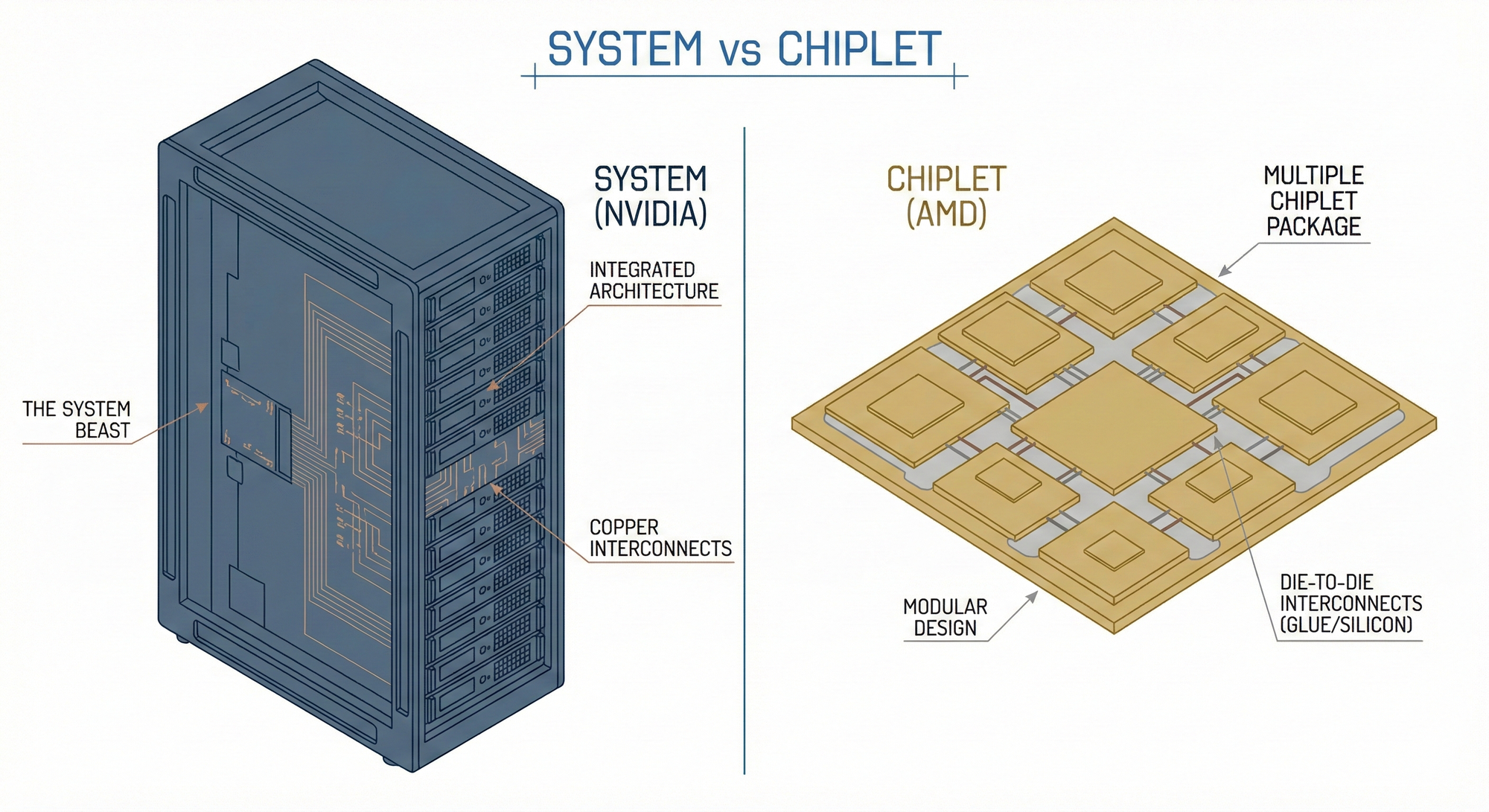
- Strategic Transformation: Eradicating Rack BoundariesPreviously, NVIDIA sold H100 chips individually, each costing millions of New Taiwan Dollars (NTD); now, through the GB200 NVL72, it sells an entire rack of 'supercomputers' valued at NTD 100 million. It connects 72 GPUs with copper cables, allowing them to operate like a giant brain. This is a terrifying business signal: NVIDIA is eating into the profit margins previously belonging to server assemblers like Dell and Supermicro. It is no longer just a component supplier; it is the IBM of the new era.
2. AMD (AMD) —— The Only Amphibious Force
Lisa Su's strategy is crystal clear: she does not aim to defeat rivals on a single battlefield, but rather to be the market's sole 'all-round arms dealer'.
- Cross-Domain Advantage: Only AMD in the world simultaneously possesses top-tier CPU (x86) and top-tier GPU technology. Not even Intel can achieve this (their GPU is too weak), nor can NVIDIA (they lack x86 CPUs). This gives AMD exclusive authority in integrated architectures (APUs).
- Technical Feature: King of ChipletsAMD was one of the first giants to acknowledge 'the death of Moore's Law' and fully pivot to chiplets. Since creating a single, enormous perfect chip is difficult and yields are low, they instead 'glue' several smaller chips together using advanced packaging. This provides AMD's MI300 series with the confidence to compete against NVIDIA in terms of cost control and yield.
- Market Positioning: The Indispensable 'Number Two'This is an excellent business position. If NVIDIA experiences even a 1% capacity shortage, or becomes excessively expensive or arrogant, Microsoft and Meta will have to support AMD for supply chain security. This is the immense business opportunity of the 'number two philosophy'.
🦈 Group Two: The Infrastructure Titans
🔥 Key Focus: This is exactly what MediaTek (2454) in Taiwan aspires to be.
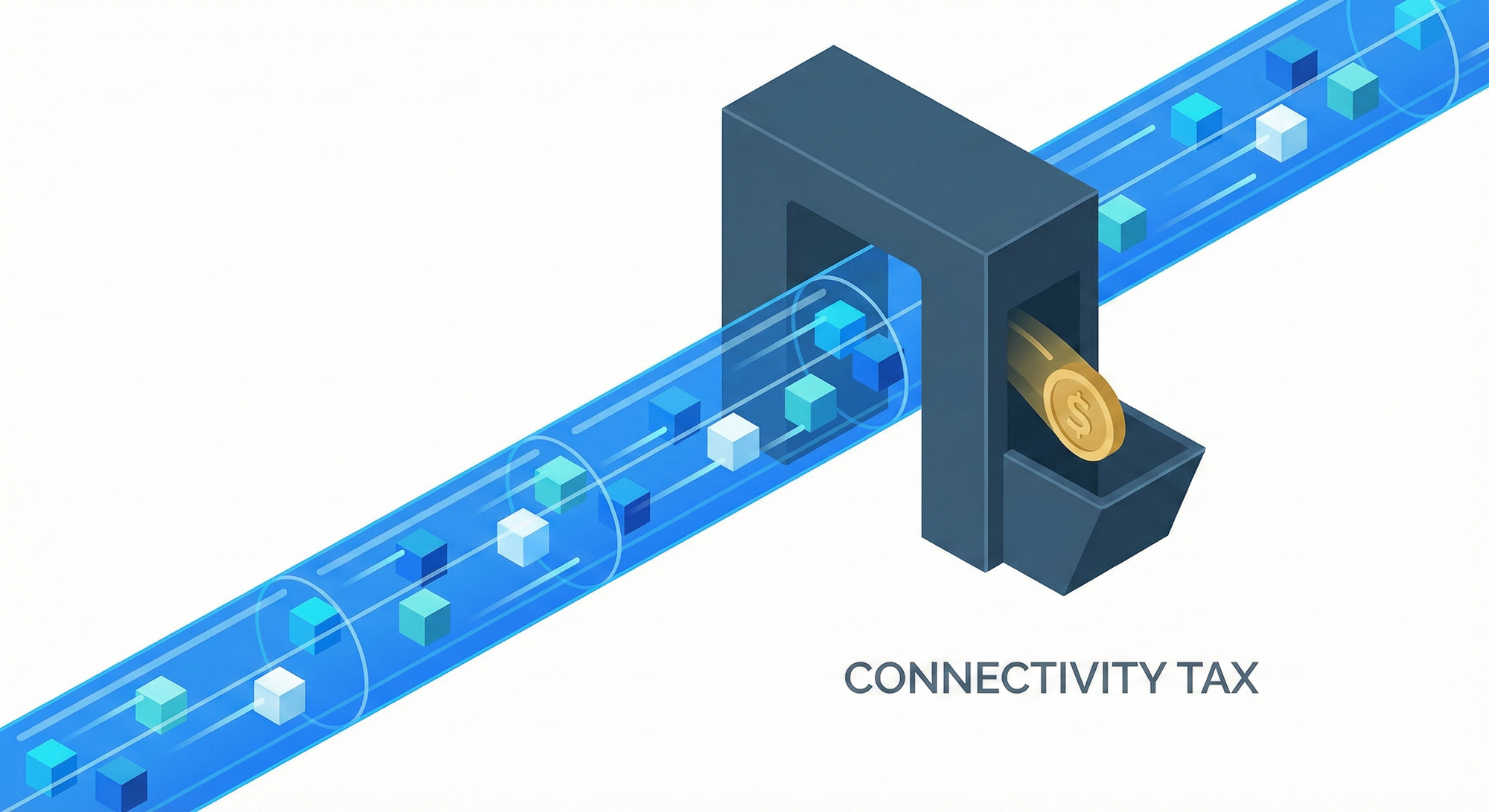
These two companies are extremely low-profile and do not directly face consumers, yet they control the 'nervous system' of data centers. As long as data is flowing, they are collecting their tolls.
3. Broadcom (AVGO) —— The 'Private Equity Fund' of the Semiconductor Industry
Broadcom's CEO, Hock Tan, is widely recognized in the industry as a management guru (and a cost-cutting master). The company's essence is more akin to a 'semiconductor ETF' or a 'private equity fund': acquiring companies with the strongest technology, raising prices, then cutting unprofitable R&D departments, leaving only core monopolistic businesses.
- Core Dominance: Digital Tolls (Networking)For data center servers to communicate, they must pass through switches. Broadcom's Tomahawk and Jericho series chips command a market share of up to 80%. They are the ones who determine whether Ethernet speeds are 400G or 800G.
- ASIC Overlord: Google's Shadow DesignerThis is the most astonishing source of profit. While Google's TPUs (Tensor Processing Units) bear Google's name, the backend physical design, IP provision, and manufacturing management are all handled by Broadcom. Broadcom acts like a 'premium foundry butler' collecting hefty commissions, raking in billions of dollars from Google annually with little effort. This 'ASIC service model' is precisely the battleground MediaTek is desperately trying to enter.
4. Marvell (MRVL) —— The Light-Speed Transporter
- Core Technology: Electro-OpticsAs AI computing power explodes, copper wire transmission has reached its physical limits (too slow, too hot). Future data must be transmitted using 'light'. Through the acquisition of Inphi, Marvell has mastered the core technology of optical communication chips (DSPs).
- AWS's Ally: If cloud giants dislike Broadcom's aggressive pricing, they turn to Marvell. For Amazon's (AWS) self-developed chips (Trainium/Inferentia), Marvell is a crucial design partner, especially in the areas of chip interconnect and customized ASICs, where it is Broadcom's strongest competitor.
📱 Group Three: The Edge Warlord
Core Mission: To dominate mobile phones and PCs and attempt to bring AI into everyone's pockets.
5. Qualcomm (QCOM) —— The PC Revolutionary Within Patent Walls
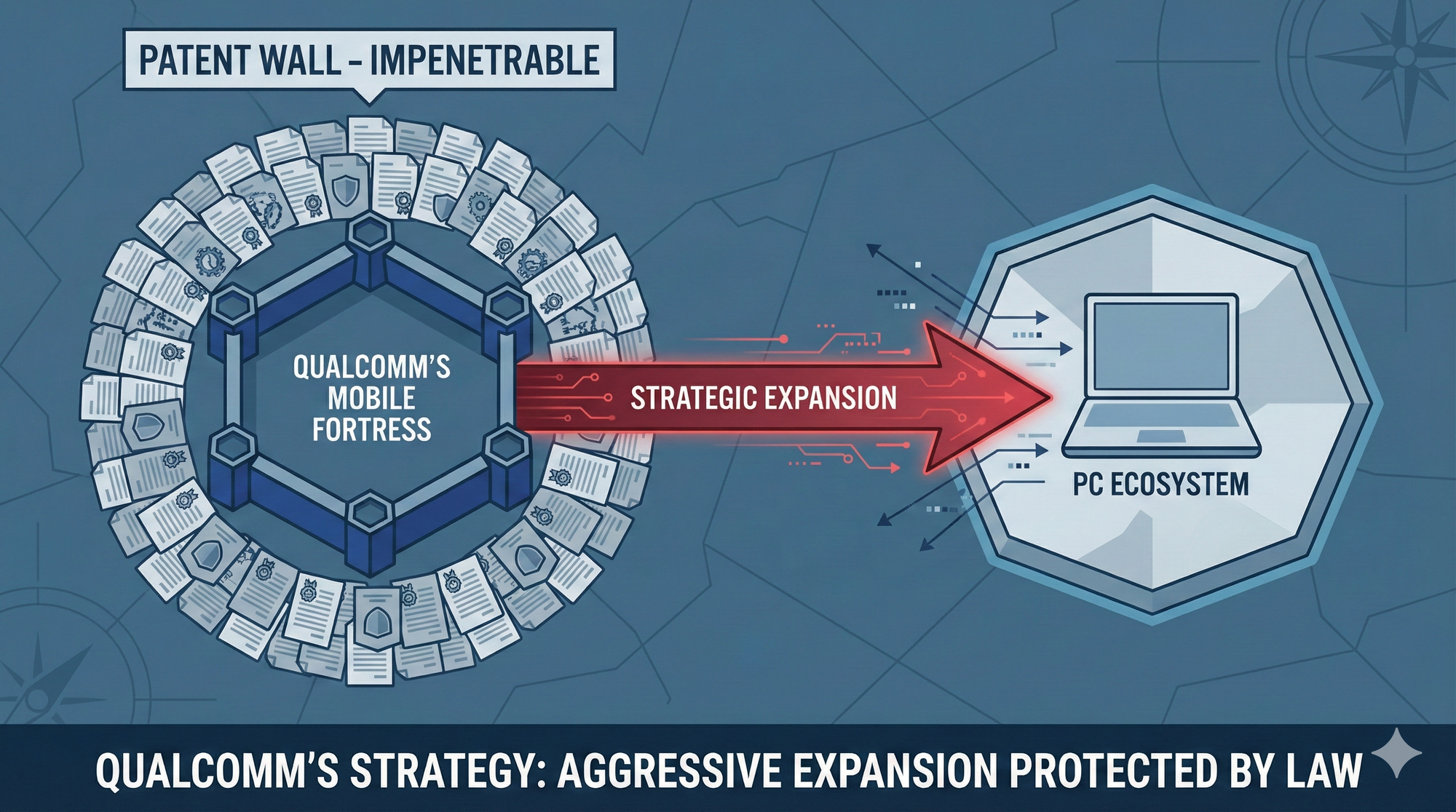
- Traditional Moat: Buy a Chip, Get a Lawyer's LetterWhat troubles Qualcomm's competitors (including MediaTek) the most is its impenetrable CDMA/5G patent network. As a setter of communication standards, this grants it absolute pricing power in the mobile phone sector.
- Latest Strategy: Snapdragon X Elite (Breaking into PC)Qualcomm's biggest story right now is not mobile phones, but the 'laptop revolution'. Microsoft and Qualcomm's joint launch of Windows on Arm seeks to replicate the success of Apple's M1 model — to create a laptop that offers 'standby time as long as a smartphone, with performance as fast as Intel'. This 'architecture war' (Arm vs. x86) is a crucial battle for Qualcomm to break through its valuation ceiling.
📊 1-3-1 Strategic Summary: Wall Street's Investment Map
After examining these five companies, you can draw a clear AI investment map:
- Specification is Power: These five companies (NVIDIA, AMD, Broadcom, Marvell, Qualcomm), plus Apple, essentially determine the destination of 80% of TSMC's advanced process capacity. TSMC is the arms factory, while these five are the generals issuing orders.
- The Invisible War of ASICs: Broadcom and Marvell are the biggest winners of the 'ASIC trend'. When Google/Amazon don't want to be held captive by NVIDIA, they turn to these two companies for self-developed chips. This is also the track where Global Unichip (3661) and MediaTek (2454) in Taiwan are striving to enter.
- Capital Flow Guidance:
- Bullish on the explosive growth of AI Training $\rightarrow$ Buy NVIDIA.
- Bullish on AI Inference and Custom Chips $\rightarrow$ Look at Broadcom / Marvell.
- Bullish on AI PCs / Mobile Phone Replacement Cycle $\rightarrow$ Look at Qualcomm.
In-depth Research · Quantitative Perspective
Want to gain more insights from semiconductor quantitative research?
[Insight Subscription Plan] Bid Farewell to Retail Investor Mentality: Build Your Alpha Trading System with 'Quantitative Chip Distribution' and 'Consensus Data'EDGE Semiconductor Research
📍 Series Map — Navigate the Complete EDGE Semiconductor Research →


