Introduction: A War with No Way Out
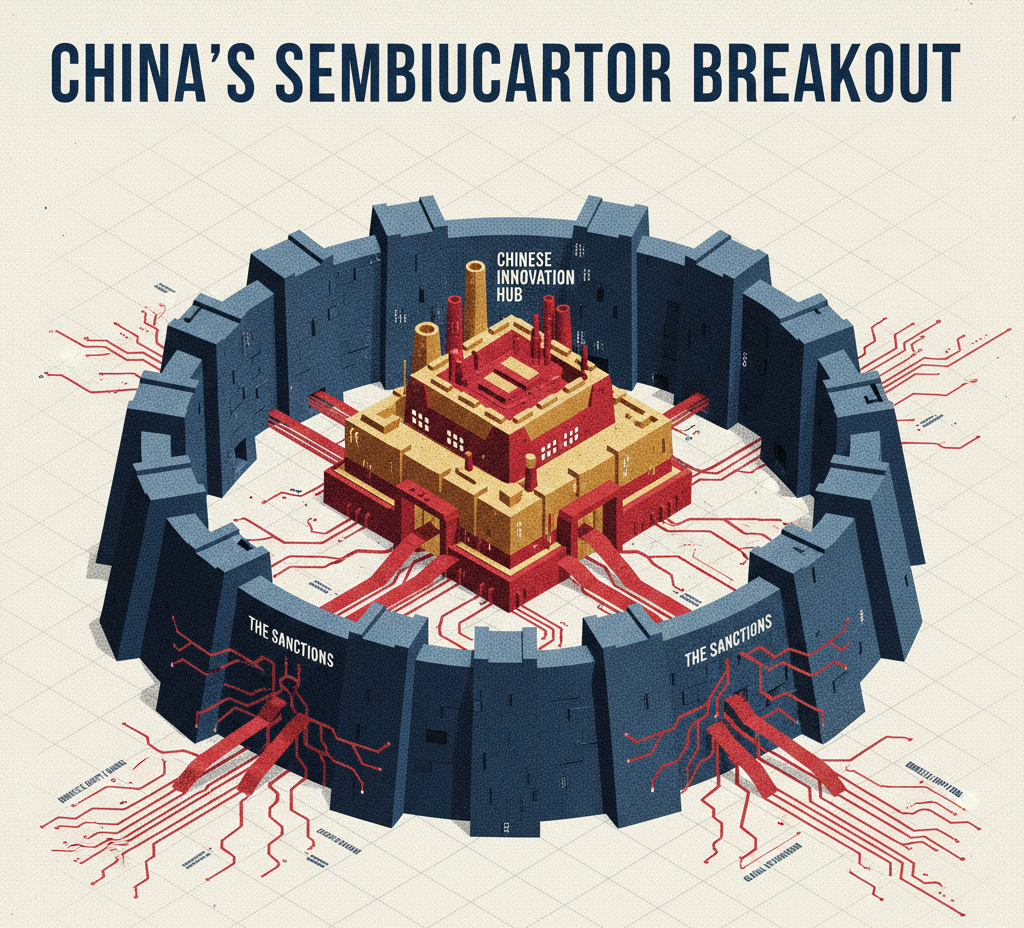
Since Huawei was placed on the Entity List in 2019, and the US comprehensively blocked AI chips in 2023, the narrative logic of China's semiconductor industry has completely changed.
In the past, they emphasized "global division of labor" and "overtaking on a bend"; now, the only creed is: "De-Americanization".
This is a brutal survival game. Facing the US's technological strangulation, China's semiconductor industry has formulated a set of extremely pragmatic and ruthless strategies:
- Forgo the Pinnacle: Temporarily not aiming for 3nm, acknowledging it's unachievable.
- Hold the Mid-Range: Utilize national effort to capture the mature market segments from 28nm to 7nm, which are the lifelines for home appliances, automotive, and industrial control.
- Niche Breakthroughs: Form monopolies in specific areas (such as CIS sensors, automotive MCUs, and memory) to establish bargaining chips.
We identify the three leading wolves in this war: The Icon (HiSilicon), the Giant Dragon Swallowing an Elephant (Will Semi), and the Pervasive Automotive Ant (GigaDevice).
🐺 Chapter One: Huawei HiSilicon — Rebirth After Being Strangled
Role: The Icon of the Red Supply Chain
HiSilicon was once the only IC design company globally capable of standing shoulder-to-shoulder with Qualcomm and Apple. After being sanctioned, its market share once dropped to zero, as if it had vanished from the face of the earth. Until 2023, the launch of the Mate 60 Pro announced that this wolf had actually been quietly preparing for a comeback underground.
1. The Secret of Kirin 9000S — How to Make 7nm Without EUV?
The emergence of this chip is a "brute-force miracle" in semiconductor physics.
ASML strictly enforced the ban, not selling EUV (Extreme Ultraviolet) machines to China. Theoretically, without EUV, chips below 7nm cannot be manufactured. So where did the Kirin 9000S come from?