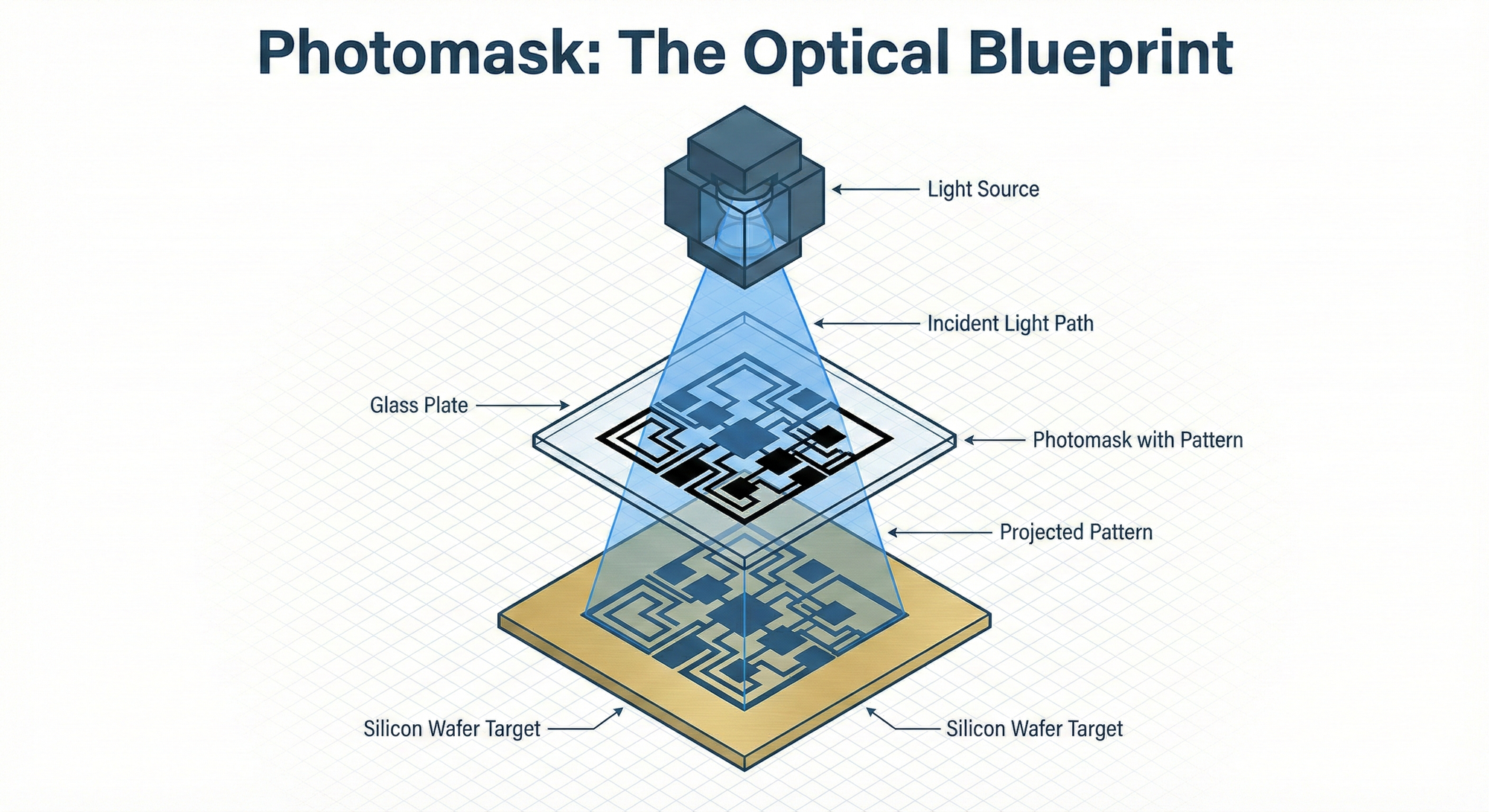
Here, we shift our focus from "technical principles" to "investment strategy in Taiwan's stock market." This domain is primarily divided into two types of players: those responsible for manufacturing photomasks (Makers) and those responsible for protecting photomasks (Guardians).
🏭 Part One: Photomask Manufacturing (The Maker) — The Game of In-house Production vs. Outsourcing
The business model for photomask manufacturing is divided into two types: Captive (in-house production) and Merchant (independent contract manufacturing).
1. TSMC's Steadfast Approach: Advanced Processes 'Never Outsourced'
Current Situation: TSMC operates a massive in-house photomask facility (E-Beam Operation).
Strategic Rationale: Why not outsource?
- Trade Secrets: Photomask patterns directly reveal chip design and process parameters (OPC parameters). This is top secret.
- Speed (Cycle Time): Frequent photomask modifications are required during the R&D phase. If outsourced, it would take several days for a round trip; if done in-house, changes can be immediately sent to the production line.
Conclusion: For the "most expensive" photomasks—7nm, 5nm, and 3nm—TSMC produces all of them in-house, preventing others from profiting.
2. Taiwan Mask Corp. (2338): The Sweeping Monk Who Gathers Pearls
Given that TSMC handles its own production, what does Taiwan Mask Corp. earn?
Positioning: Specializes in outsourced orders for "mature process nodes" and "non-critical layers."
Rationale:
- TSMC's photomask production capacity is limited. They allocate their expensive equipment to produce 3nm photomasks (high-margin).
- As for simpler photomasks, such as those for 40nm, 90nm, or power management ICs (PMICs), it is not cost-effective for TSMC to produce them.
- Strategy: TSMC 'overflows' these orders to Taiwan Mask Corp. This is a symbiotic relationship, akin to 'the elder brother eats the meat, and the younger brother drinks the soup.'
Moat: While its technology may not surpass that of the original manufacturers, photomask equipment is very expensive, making it difficult for new entrants, thus forming a stable oligopoly market.
🛡️ Part Two: The Imperial Guard — Gudeng Precision (3680)'s Legend