5-4-4 Ultimate System Boss: SLT (System-Level Test) and Chroma ATE (2360)'s EDA-level Adhesion
Chroma dominates AI chip SLT, vital for simulation, using active thermal control to lock temps in milliseconds, managing intense heat. Deeply coupled with chip firmware, high switching costs & stickiness are ensured. With surging high-stress testing/measurement, Chroma becomes a core AI infra met...
⚔️ Written Test vs. Practical Exercise: Why is 100% Full Inspection a Mandatory Requirement?
To understand the high-profit logic of Chroma ATE (2360), we must first deeply understand the essence of SLT (System Level Test) in the AI era.
What we discussed previously regarding CP (Wafer Test) and FT (Final Test) can at best be considered a "written test". In a written test, the equipment only sends standard voltage and logic electrical signals to check if the chip responds. If the circuit works, the chip passes.
However, when this GPU, costing tens of thousands of US dollars, is sent to a Google or Microsoft data center, truly plugged into a server motherboard, installed with an operating system, and begins training large language models (LLMs) with hundreds of billions of parameters day and night, will it suddenly crash? This absolutely cannot be measured by a "written test". It must undergo a brutal "practical exercise", which is SLT.
In an SLT machine, the chip is plugged into a "real server motherboard" and runs the most authentic AI software with extreme computational loads.
Why is it a Mandatory Requirement?
In an AI data center, the sudden failure of a single chip can often trigger a chain reaction, leading to the shutdown of server racks worth millions of US dollars.
The cost is too severe. Therefore, NVIDIA and major cloud giants have issued an absolute mandatory requirement: **SLT for high-end AI chips must involve 100% full coverage inspection, with no spot checks allowed!**
🔥 The Ultimate Challenge of Ice and Fire: A "Nuclear-Level" Heat Wave in 0.1 Seconds
When SLT becomes standard, a phenomenon that almost defies the laws of physics emerges: **"Extreme Transient Heat Wave"**.
When AI chips run real software, their power consumption is not stable. When model computation suddenly enters a complex tensor matrix, the chip's power consumption experiences a terrifying "transient surge". One moment it might be idling at 50W, and **in just 0.1 seconds, its power consumption can instantly surge to 800W or even over 1,000W!** According to the latest confidential industry data assimilated by our think tank from the front lines, in the upcoming Rubin generation, **the TDP (Thermal Design Power) of a single chip will astonishingly reach as high as 2.3kW!**
What does this mean? It means that inside the SLT test equipment, the chip's surface will, within a fraction of a second, erupt with extreme heat sufficient to instantly melt plastic and turn metal red hot. If the test equipment cannot dissipate this heat "instantly", this perfect chip, worth tens of thousands of US dollars, will burn into a wisp of smoke within 2 seconds.
🧊 Chroma ATE (2360)'s ATC Magic: Absolute Domain in 50 Milliseconds
Ordinary fans or water cooling plates simply cannot cope with such a "sudden nuclear burst" within 0.1 seconds. This is the core moat that allows **Chroma ATE (2360)** to dominate the global SLT equipment market – **ATC (Active Thermal Control) system**.
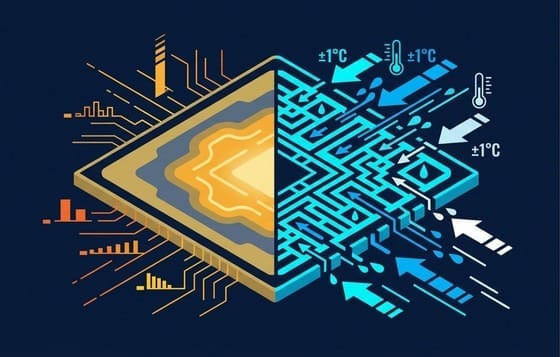
This is a system that employs near black-magic level fluid dynamics and thermodynamics: Inside Chroma ATE's SLT equipment, there are extremely sensitive sensors and high-pressure microfluidic valves. The moment it detects an AI chip beginning full-speed computation and its temperature about to surge, **the machine can precisely inject ice water (or a specialized cooling liquid) into the micro-channels of the test socket at extremely high pressure within a mere 50 milliseconds (0.05 seconds)!**
Conversely, if the chip suddenly stops computing and its temperature plummets, the machine instantly injects hot water to prevent the chip from physically cracking due to drastic thermal expansion and contraction. Chroma ATE's ATC system can, under such extremely aggressive computational stress, **"lock the chip's test temperature firmly within an extremely small error range of ±1°C"!**
Looking globally, there is almost no second alternative equipment supplier capable of maintaining dynamic temperature control within ±1°C under terrifying power consumption of 1000W or even 2.3kW.
With this magic, Chroma ATE has become a "god-like presence" as a gatekeeper on NVIDIA's test production lines.
🕸️ Invisible Chains: Why Does Chroma ATE Possess "EDA Software-Level" Extreme Adhesion?
Many mistakenly believe that SLT (System-Level Test) equipment is merely a large computer equipped with powerful air conditioning. This is a significant strategic misjudgment.
The essence of SLT is to have AI chips run real software. This means that Chroma ATE's test equipment cannot merely blow cold air "from the outside"; it must engage in deep data communication and hardware-software coupling with the AI chip's "nervous system" (underlying firmware and operating system).
When NVIDIA's AI chip is about to execute an extremely power-intensive tensor matrix operation during testing, the chip's internal sensors must send a digital signal to Chroma ATE's equipment "milliseconds in advance," informing it: "I'm about to heat up, prepare to inject water!" This involves extremely complex communication protocols, the writing of test programs, and the interfacing of real-time operating systems (RTOS). Chroma ATE's engineers actually develop this SLT testing process alongside leading chip design manufacturers.
This creates the most formidable moat in the tech industry: **"Extreme Switching Cost"**.
Once this hardware-software integrated testing system is developed, validated, and goes into mass production, customers would absolutely not dare to switch suppliers. Replacing Chroma ATE would mean NVIDIA would have to find another equipment vendor, redevelop all underlying communication protocols, and go through a lengthy re-validation process. In the high-stakes, life-or-death race where an AI chip "launching a month late could mean losing the entire market," no decision-maker would dare to bear such a risk.
Chroma ATE sells hardware, but it enjoys astonishing gross margins of over 60% and absolute adhesion, much like an EDA (Electronic Design Automation) software company. As long as major clients' next-generation Rubin chips surpass Blackwell in shipments, Chroma ATE's SLT equipment orders are a sure thing.
🚀 2026's Hidden Dual Engines: 800V Power Testing and Metrology
If you thought Chroma ATE relies solely on SLT to conquer the world, you would be severely underestimating this multi-core powerhouse. According to our think tank's in-depth investigations from the industry front lines, Chroma ATE's technological expansion in 2026 will be driven by two extremely powerful new dynamics:
This post is for subscribers only
Sign up now to read the post and get access to the full library of posts for subscribers only.